
Rainwater Harvesting for Farmhouses: Planning, Storage and Maintenance
Water conservation is becoming an essential part of sustainable farmhouse development. Whether you own a weekend retreat, agricultural farmhouse or luxury villa near Hyderabad, installing a reliable Rainwater Harvesting for Farmhouse system can reduce dependence on external water supplies and improve water management.
With effective planning, suitable storage and regular maintenance, rainwater can support garden irrigation, landscape cleaning and other non-drinking applications. At Regal Elite Constructions , we understand the importance of integrating practical water-management solutions into farmhouse planning and construction.
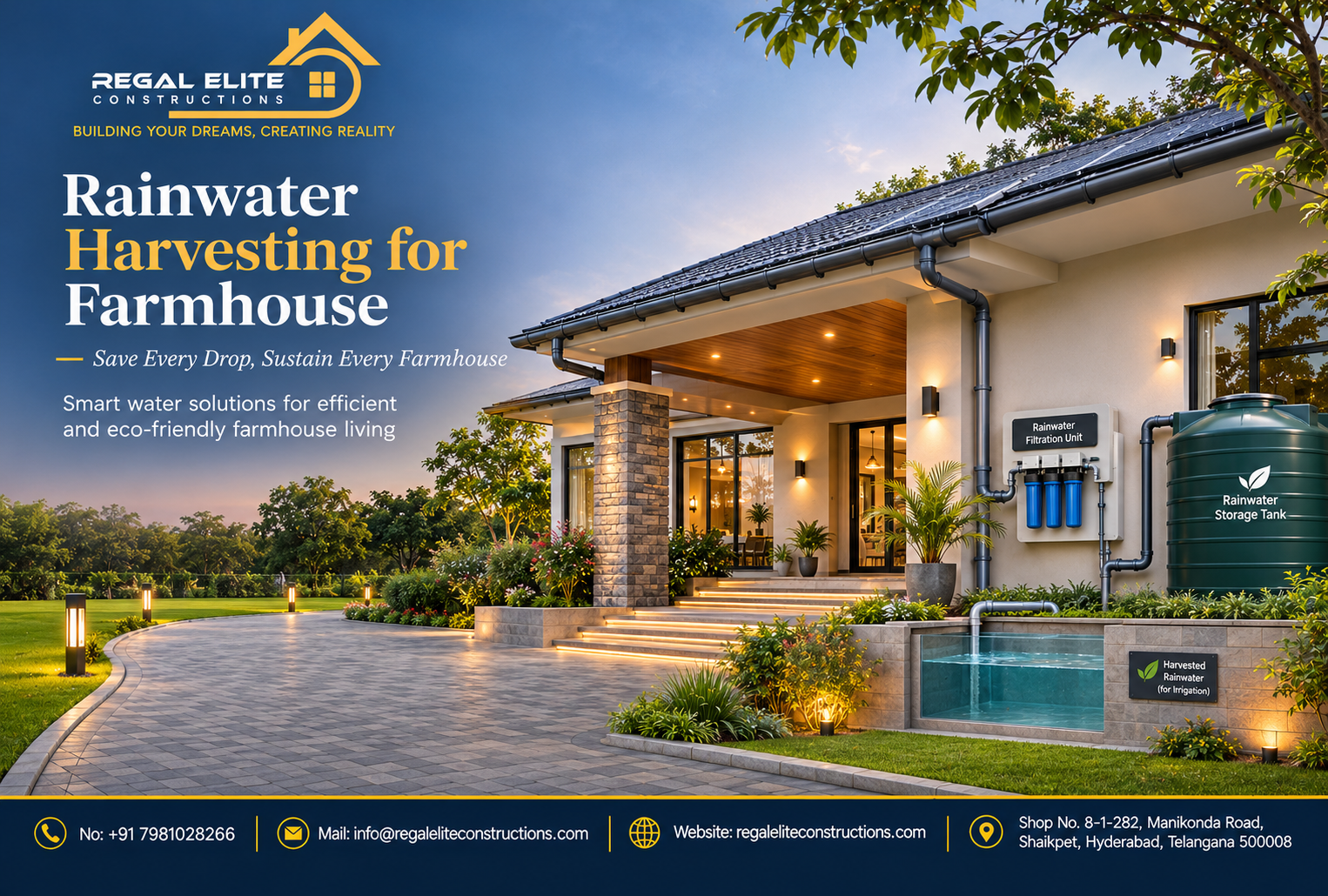
What Is Rainwater Harvesting for Farmhouse?
Rainwater harvesting is the process of collecting rainwater from rooftops, directing it through gutters and pipes, filtering unwanted debris, and storing it for future use or directing it into a suitable groundwater recharge structure.
A properly designed Rainwater Harvesting for Farmhouse system helps manage seasonal rainfall more efficiently. According to the Central Ground Water Board , rooftop rainwater harvesting has been implemented in Hyderabad as part of groundwater management practices.
Benefits of Rainwater Harvesting for Farmhouse
- Water conservation: Collects seasonal rainfall for appropriate non-potable uses.
- Reduced water expenses: May lower dependence on purchased water or other supplies.
- Garden irrigation: Provides supplementary water for lawns and ornamental landscaping.
- Stormwater management: Helps reduce uncontrolled roof runoff.
- Sustainable development: Supports environmentally responsible farmhouse construction.
1. Planning a Rainwater Harvesting System
Successful Rainwater Harvesting for Farmhouse begins with understanding the property layout, roof area, local rainfall pattern, water demand and available space for storage or recharge.
Evaluate the Rooftop Collection Area
Rooftops are common collection surfaces because rainwater can flow through gutters into controlled drainage pipes. Roof material, slope and cleanliness affect both collection efficiency and water quality.
Estimate Rainwater Collection
A simple calculation helps estimate potential water collection:
Harvested Water (Litres) = Roof Area (m²) × Rainfall (mm) × Runoff Coefficient
Example: A 200 m² rooftop receiving 100 mm of rainfall with an assumed collection efficiency of 0.8 could yield approximately 16,000 litres before additional losses.
Actual collection will vary with weather, roof conditions and system losses. The U.S. Department of Energy explains the main components and sizing considerations of rainwater harvesting systems.
2. Choosing the Right Storage System
Storage is a major component of Rainwater Harvesting for Farmhouse. Tank capacity should reflect seasonal rainfall, daily water demand, available installation space and budget.
| Storage Type | Features | Suitable Application |
|---|---|---|
| Plastic Water Tank | Lightweight and easy to install | Small farmhouses |
| Underground RCC Tank | Durable with professional waterproofing | Larger farmhouse projects |
| Modular Storage Tank | Flexible storage configuration | Properties with limited space |
| Recharge Structure | Directs filtered water underground | Suitable groundwater recharge sites |
For technical guidance, refer to the Bureau of Indian Standards rooftop rainwater harvesting guidelines (IS 15797) . Storage tanks should have secure covers, screened openings, accessible cleaning points and safely routed overflow outlets.
3. Filtration and First-Flush Arrangement
A reliable Rainwater Harvesting for Farmhouse system needs filtration to reduce leaves, dust and sediment entering the tank. A first-flush diverter helps redirect the initial dirty runoff away from storage.
Common components include roof gutters, leaf screens, first-flush diverters, sediment filters, storage tanks and overflow pipelines.
The Centers for Disease Control and Prevention explains that collected rainwater may contain germs and chemicals. Drinking or cooking use requires appropriate treatment, testing and professional advice.
4. Groundwater Recharge for Farmhouses
Where soil conditions and local requirements permit, groundwater recharge can complement storage tanks. Filtered rainwater may be directed towards engineered recharge pits or trenches.
Before construction, professionals should assess soil permeability, groundwater conditions, nearby foundations and potential contamination. Recharge structures should not receive untreated wastewater or polluted surface runoff.
5. Rainwater Harvesting Maintenance
Regular maintenance keeps Rainwater Harvesting for Farmhouse systems efficient and reduces contamination risks. Even well-constructed systems need periodic inspection.
- Before the monsoon: Clean gutters, roof drains, filters and first-flush components.
- During rainfall: Inspect pipes, tank inlets and overflow arrangements for leaks or blockages.
- After heavy storms: Remove accumulated debris and check filtration performance.
- Periodically: Inspect tank covers, mosquito screens, pumps and sediment accumulation.
- As required: Arrange safe professional tank cleaning and water-quality testing.
The U.S. Environmental Protection Agency rainwater harvesting guide provides useful recommendations for cleaning, inspecting and maintaining collection systems.
6. Integrating Rainwater Harvesting with Farmhouse Design
Rainwater Harvesting for Farmhouse works best when included during initial construction planning. Architects and engineers can coordinate gutters, underground pipelines, storage locations and landscape drainage before finishing work begins.
Farmhouse owners planning premium outdoor facilities can also explore our guide on Best Swimming Pool Construction in Hyderabad for Homes, Villas and Resorts . Swimming pools require separate water-quality, filtration and disinfection arrangements; untreated harvested rainwater should not be added directly to a swimming pool.
7. Common Mistakes to Avoid
Many Rainwater Harvesting for Farmhouse installations underperform because important design or maintenance details are overlooked.
- Installing insufficient storage capacity.
- Ignoring first-flush filtration.
- Allowing overflowing water near foundations.
- Leaving tank openings uncovered.
- Connecting non-potable water to drinking-water pipes without proper protection.
- Failing to plan periodic maintenance.
For further guidance on system planning, rainwater reuse and maintenance, review the Department of Energy alternative water sources best practices .
Frequently Asked Questions (FAQs)
1. Is Rainwater Harvesting for Farmhouse useful in Hyderabad?
Yes. It can help collect seasonal rainfall for suitable non-drinking applications and support better stormwater management.
2. What is the ideal rainwater storage tank size?
Tank size depends on roof area, expected rainfall, water consumption and available space. A site-specific calculation is best.
3. Can harvested rainwater be used for gardening?
Collected rainwater can support ornamental landscaping when water quality is suitable. Extra precautions are necessary for edible crops.
4. How often should rainwater filters be cleaned?
Inspect filters before the monsoon and after major rainfall events. Cleaning frequency depends on accumulated leaves and sediment.
5. Can Rainwater Harvesting for Farmhouse reduce water bills?
It may reduce purchased-water consumption, depending on rainfall, collection capacity and the property's water demand.
6. Is rainwater safe for drinking?
Collected rainwater should not be assumed safe for drinking. Suitable treatment, testing and safe storage are necessary.
Conclusion
Investing in Rainwater Harvesting for Farmhouse is a practical step towards sustainable property management. Proper planning, storage selection, filtration and maintenance can make a meaningful difference to long-term water efficiency.
For farmhouse development and integrated construction planning in Hyderabad, Regal Elite Constructions can help you explore design requirements and suitable water-management arrangements for your property.
Contact Regal Elite Constructions:
Phone: +91 79810 28266
Email: regaleliteconstructions@gmail.com
Address: Shop No. 8-1-282, Manikonda Road, Shaikpet, Hyderabad, Telangana 500008.