
Eco-Friendly Farmhouse Design: Practical Features to Plan Before Building
An Eco Friendly Farmhouse Design combines comfortable country living with responsible construction, energy efficiency, water conservation, and natural landscaping. Whether you are planning a weekend retreat, family farmhouse, or luxury countryside property near Hyderabad, sustainable planning can help reduce resource consumption and long-term maintenance expenses.
At Regal Elite Constructions , we understand the importance of integrating practical design features into farmhouse construction from the beginning.
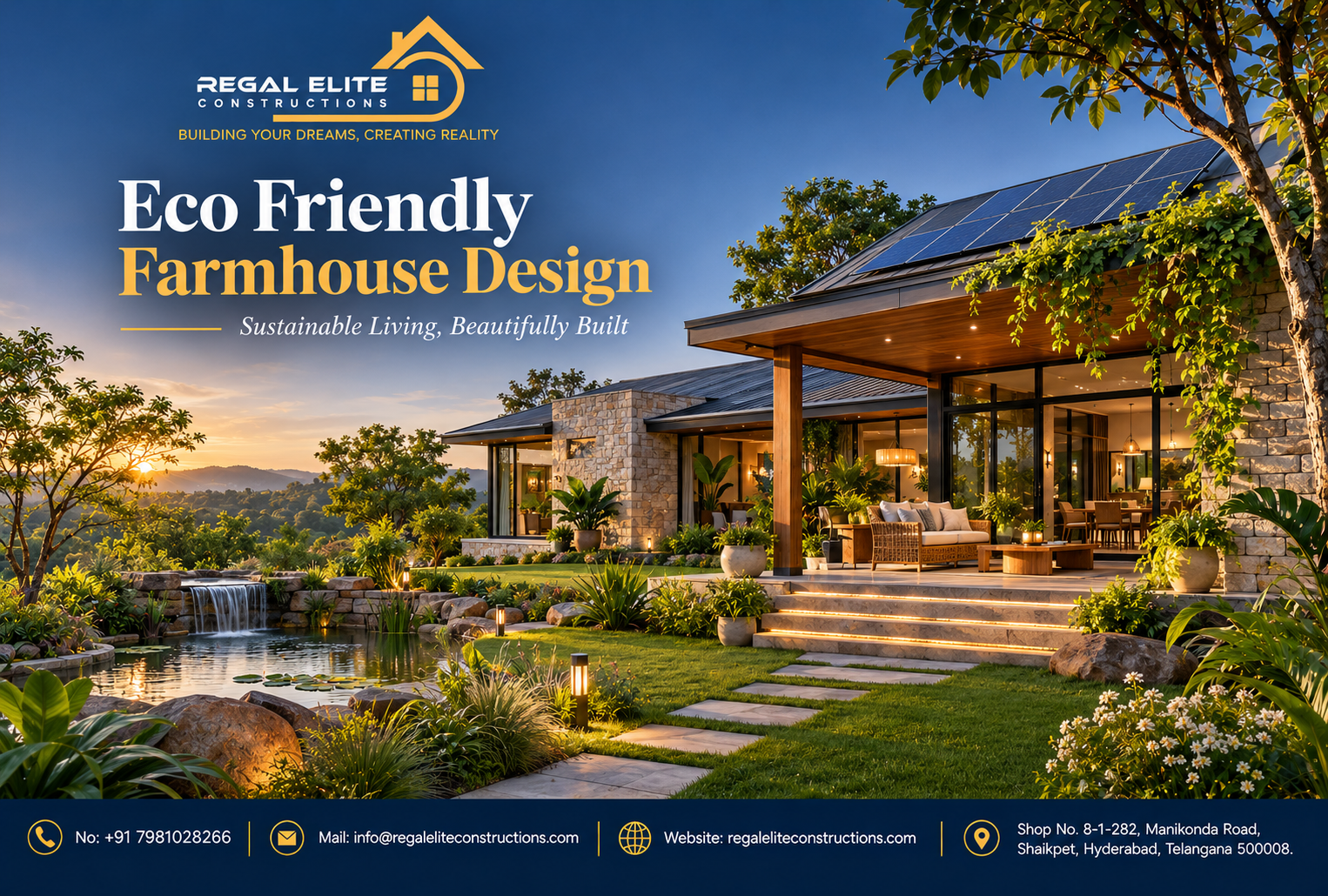
1. Choose the Right Site and Building Orientation
Successful Eco Friendly Farmhouse Design begins with understanding the land. Before finalizing construction, evaluate soil conditions, drainage, sunlight, existing trees, wind direction, and access roads.
In Hyderabad's hot climate, thoughtful orientation and shading can limit unwanted solar heat. Position living areas to benefit from daylight without excessive afternoon heat.
- Preserve healthy existing trees wherever practical.
- Plan shaded verandahs and outdoor seating areas.
- Provide suitable cross-ventilation openings.
- Minimize unnecessary land excavation.
- Protect natural drainage routes.
The U.S. Department of Energy's passive solar design guide explains how orientation, windows, shading, and building materials influence indoor comfort.
2. Install Rainwater Harvesting Systems
Water conservation is essential in Eco Friendly Farmhouse Design, especially for properties with gardens, lawns, and outdoor entertainment areas.
Plan rooftop rainwater collection, first-flush diversion, filtration, and suitable storage or recharge infrastructure. A properly designed system can support non-potable uses, depending on water quality and treatment.
- Rainwater collection gutters and downpipes
- Filtered storage tanks
- Groundwater recharge structures where suitable
- Drip irrigation for garden plantations
- Low-flow bathroom and kitchen fixtures
The US EPA rainwater harvesting guide provides useful information about collection, storage, filtration, and reuse systems.
3. Plan Solar Power Before Roof Construction
Solar energy is an important consideration for an Eco Friendly Farmhouse Design. Planning rooftop solar infrastructure during architectural design helps avoid expensive modifications later.
Reserve an appropriately oriented, structurally suitable, largely unshaded roof area. Consider solar-ready electrical conduits, inverter space, safe maintenance access, and future battery storage requirements.
Homeowners can review rooftop solar information through India's Ministry of New and Renewable Energy . Installation eligibility and financial assistance should be checked against current scheme rules.
4. Select Sustainable Construction Materials
Material selection directly affects the durability and environmental impact of Eco Friendly Farmhouse Design. Choose materials based on their suitability, expected service life, availability, and maintenance requirements.
- Locally sourced stone where appropriate
- Recycled-content materials with verified specifications
- Certified or responsibly sourced timber
- Low-VOC paints, adhesives, and finishes
- Durable roofing and insulation systems
Avoid choosing products solely because they are advertised as eco-friendly. Structural performance, transportation, manufacturing impact, and long-term replacement requirements also matter.
The Indian Green Building Council Green Homes programme offers useful guidance on resource efficiency, materials, water conservation, and indoor environmental quality.
5. Improve Natural Ventilation and Thermal Comfort
A comfortable farmhouse should not depend entirely on air-conditioning. Eco Friendly Farmhouse Design can incorporate high ceilings, shaded windows, ventilated roof spaces, effective insulation, and carefully positioned openings.
Combine passive cooling with ceiling fans and efficient air-conditioning when necessary. Insect screens, security, dust conditions, and seasonal weather should also influence window planning.
India's Bureau of Energy Efficiency Eco-Niwas Samhita 2024 is a valuable reference for residential energy-efficient building design.
6. Design Water-Efficient Landscaping
Landscaping completes a successful Eco Friendly Farmhouse Design. Instead of covering large areas with water-intensive lawns, combine native or climate-adapted plants, shade trees, permeable pathways, and mulched planting beds.
Use drip irrigation where appropriate and group plants according to their water needs. Plan drainage gradients to direct rainfall away from the farmhouse foundation.
The US EPA guidance on drought preparation explains the value of water-efficient planting and rainwater management.
7. Integrate Swimming Pools Responsibly
A swimming pool can complement Eco Friendly Farmhouse Design when water and energy demands are considered early. Plan efficient filtration, suitable circulation equipment, leak-resistant construction, safe drainage, and practical pool covers where appropriate.
Pool location should coordinate with trees, shading, decking, electrical services, and landscape irrigation. Thoughtful planning also makes future maintenance easier.
For additional guidance, read our detailed article on Best Swimming Pool Construction in Hyderabad for Homes, Villas & Resorts .
8. Plan Wastewater and Solid Waste Management
Responsible waste management is another practical feature of Eco Friendly Farmhouse Design. Provide separate arrangements for household waste, organic garden waste, and wastewater.
- Allocate space for waste segregation.
- Consider composting suitable organic waste.
- Plan an approved septic or sewage treatment solution.
- Provide convenient maintenance access.
- Reuse treated wastewater only where safe and permitted.
9. Prioritize Features Within Your Budget
Not every sustainable feature must be installed immediately. However, provisions for future systems should be included before construction begins.
| Feature | Main Benefit | Planning Priority |
|---|---|---|
| Building orientation | Improved thermal comfort | Essential |
| Rainwater harvesting | Water conservation | High |
| Roof insulation | Reduced heat gain | High |
| Solar-ready infrastructure | Future energy flexibility | High |
| Native landscaping | Lower irrigation demand | High |
| Smart lighting controls | Reduced unnecessary usage | Optional |
10. Common Eco-Friendly Farmhouse Design Mistakes
Some common mistakes include installing large west-facing glass walls without shading, selecting unsuitable materials, overlooking rainwater drainage, and designing landscaping without understanding water availability.
An effective Eco Friendly Farmhouse Design also requires checking local land-use permissions, building approvals, structural requirements, and wastewater regulations before starting work.
Frequently Asked Questions
1. What is Eco Friendly Farmhouse Design?
Eco Friendly Farmhouse Design is an approach that combines resource-efficient construction, natural ventilation, responsible material selection, and water-saving systems to create comfortable, sustainable farmhouse spaces.
2. Is an eco-friendly farmhouse expensive to build?
Initial costs depend on design choices and installed systems. Some passive design measures can be affordable, while solar equipment and specialized systems may require higher upfront investment.
3. Which features should I prioritize first?
Start with site drainage, building orientation, insulation, water conservation, and suitable ventilation. These decisions are difficult to change after construction.
4. Can I install solar panels later?
Yes. However, planning roof strength, electrical routing, equipment placement, and access during construction can make future installation easier.
5. Can a swimming pool be part of an eco-friendly farmhouse?
Yes. Efficient circulation equipment, proper waterproofing, water management, and suitable covers can help reduce unnecessary resource consumption.
6. Is Eco Friendly Farmhouse Design suitable for Hyderabad?
Yes. Shading, roof insulation, water-efficient landscaping, rainwater management, and climate-responsive orientation are especially relevant to Hyderabad's seasonal conditions.
Conclusion
A well-planned Eco Friendly Farmhouse Design balances sustainability, comfort, durability, and practical maintenance. Making the right decisions before building can prevent costly changes and create a countryside property that remains enjoyable for years.
Regal Elite Constructions helps property owners explore farmhouse construction, interior planning, landscaping, and swimming pool solutions tailored to their project goals. Contact our team to discuss your farmhouse requirements.
Contact Regal Elite Constructions:
Phone: +91 79810 28266
Email: regaleliteconstructions@gmail.com
Address: Shop No. 8-1-282, Manikonda Road, Shaikpet, Hyderabad, Telangana 500008.
Website: https://regaleliteconstructions.com/
Plan your Eco Friendly Farmhouse Design with Regal Elite Constructions.