
Indoor Swimming Pool Design Guide: Planning, Construction, Ventilation, Lighting & Luxury Ideas
An indoor pool can transform a home, villa, farmhouse, hotel, wellness centre or premium residential property into an all-season leisure environment. However, successful Indoor Swimming Pool Design involves far more than constructing a swimming pool and enclosing it with walls and a roof. The building envelope, pool structure, waterproofing, ventilation, humidity management, filtration, heating, lighting, drainage, acoustics, safety and interior finishes must all function together.
Unlike an outdoor pool, an indoor pool continuously introduces moisture into an enclosed building. Therefore, professional Indoor Swimming Pool Design requires coordinated architectural, structural and mechanical planning from the earliest stage. Decisions made during concept development can influence comfort, operating costs and maintenance for many years.
For homeowners and developers in Hyderabad, a carefully planned Indoor Swimming Pool Design provides privacy and year-round usability while protecting the surrounding building from excessive moisture. It can also become one of the most visually impressive areas of a luxury residence.
This comprehensive guide from Regal Elite Constructions explains the essential steps involved in Indoor Swimming Pool Design, from room dimensions and pool shape to ventilation, lighting, filtration, finishes and long-term maintenance.
The goal of good Indoor Swimming Pool Design is to create a room that feels comfortable and luxurious while performing reliably behind the finishes. Every visible detail should therefore be supported by sound engineering.
Indoor Pool Planning Guide
- Understanding indoor pools
- Benefits of indoor swimming pools
- Site and space planning
- Pool dimensions and proportions
- Pool shape selection
- Structural engineering
- Waterproofing
- Ventilation and humidity management
- Temperature planning
- Filtration and circulation
- Pool heating
- Lighting
- Natural daylight
- Interior materials
- Pool deck planning
- Drainage
- Ceiling design
- Acoustics
- Privacy
- Safety
- Luxury features
- Residential pools
- Villa pools
- Farmhouse pools
- Hotel and wellness pools
- Energy efficiency
- Maintenance
- Construction process
- Cost factors
- Common mistakes
- FAQs
1. What Is an Indoor Swimming Pool?
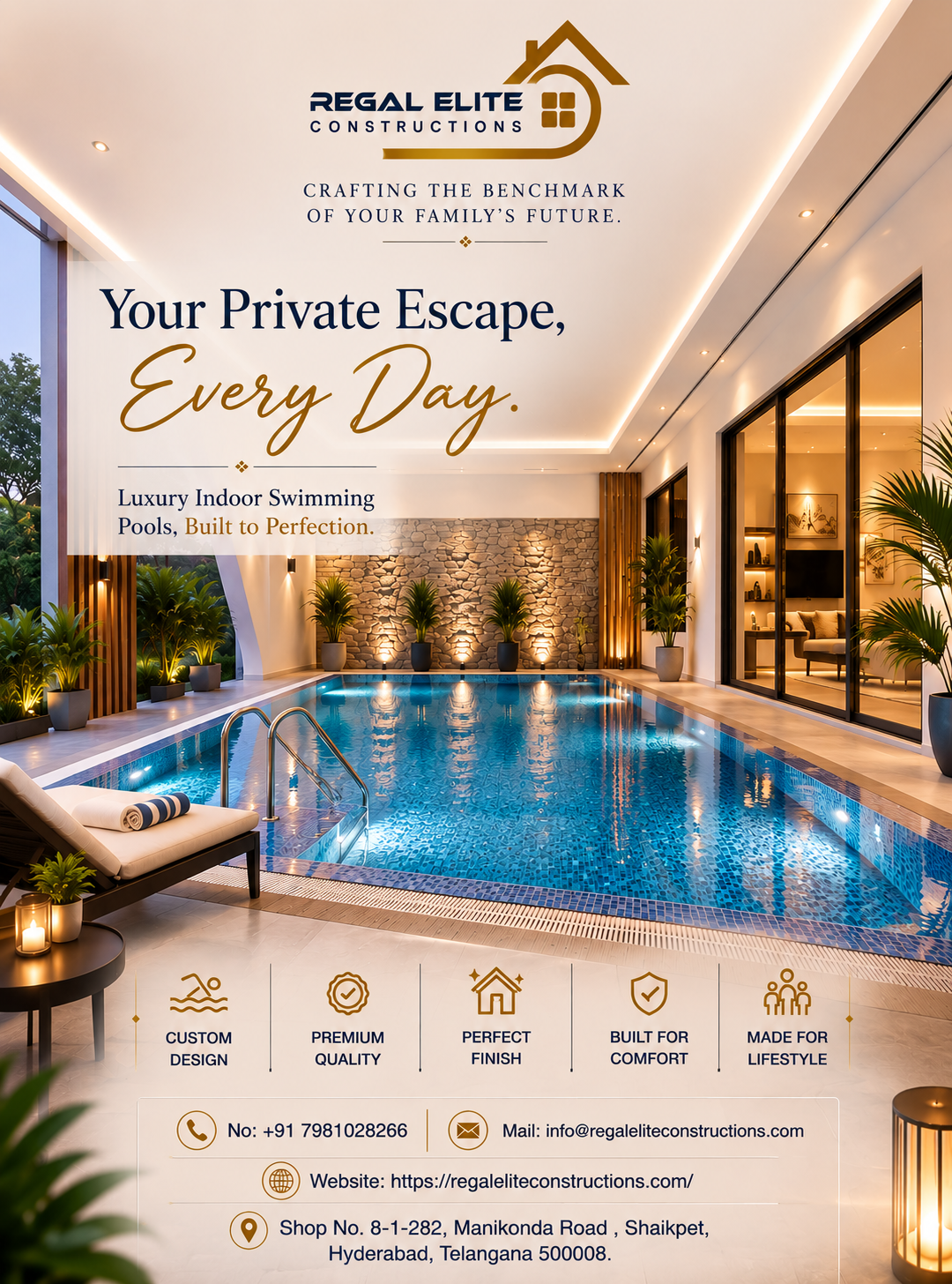
An indoor swimming pool is a pool constructed inside a fully or substantially enclosed building. The space may be connected to the main residence or designed as a separate pool house. Because water constantly evaporates into the surrounding room, Indoor Swimming Pool Design requires significantly more environmental control than a conventional outdoor swimming pool.
The room containing the pool is often called a natatorium in professional engineering and architectural contexts. A properly engineered Indoor Swimming Pool Design controls the relationship between pool water, air temperature, humidity, ventilation and the building envelope so that users remain comfortable and building materials remain protected.
2. Why Are Indoor Pools Becoming Popular?
The biggest advantage is year-round usability. Outdoor pools can be affected by intense sunlight, heavy rain, dust, leaves and seasonal weather. With good Indoor Swimming Pool Design, owners can create a protected environment that remains usable regardless of many external conditions.
Privacy is another important benefit. An enclosed pool can offer greater separation from neighbouring properties and surrounding roads. For premium homes, Indoor Swimming Pool Design can also integrate with a gym, spa, sauna, steam room or entertainment lounge to create a complete wellness zone.
3. Start With the Purpose of the Pool
Before choosing tiles or lighting, identify how the pool will actually be used. A family recreation pool has different requirements from a lap pool, hydrotherapy pool or hotel pool. Defining the primary purpose helps determine the most suitable Indoor Swimming Pool Design.
For example, a fitness-focused Indoor Swimming Pool Design may prioritise length and uninterrupted swimming space, while a family pool may prioritise shallow areas, steps, seating ledges and easy access. Luxury villas may combine swimming space with an integrated spa or relaxation zone.
4. Evaluate the Available Space
The pool itself occupies only part of the required room. Deck space, circulation, equipment access, furniture, showers and maintenance routes all require additional area. A successful Indoor Swimming Pool Design begins with realistic room dimensions rather than fitting the largest possible water body into the available footprint.
Consider the relationship between the pool room and nearby bedrooms, living spaces, garden areas and service zones. A well-positioned Indoor Swimming Pool Design should be visually accessible where desired but acoustically and environmentally separated from spaces that need quiet or dry conditions.
5. Choosing the Right Pool Size
There is no universal ideal size. The correct dimensions depend on the available land, building layout, intended users and budget. When developing an Indoor Swimming Pool Design, it is generally better to create a well-proportioned pool with comfortable deck space than an oversized pool surrounded by narrow walkways.
The length, width and depth should also relate to the intended activity. A recreational Indoor Swimming Pool Design may use varied depths, while a lap-oriented pool usually benefits from a simpler rectangular geometry and predictable swimming lane.
6. Rectangular Indoor Pools
Rectangular pools remain one of the most practical options because they suit modern architecture and provide efficient swimming space. A rectangular Indoor Swimming Pool Design can align naturally with structural grids, floor tiles, ceiling panels and large windows.
The clean geometry also supports a minimalist visual style. For contemporary villas, a rectangular Indoor Swimming Pool Design combined with large-format stone, warm lighting and full-height glazing can create a sophisticated resort-inspired atmosphere.
7. Freeform and Curved Indoor Pools
Curved pools can create a softer, more informal atmosphere. This approach may work well in a spa, resort or tropical-themed environment. However, a freeform Indoor Swimming Pool Design generally requires more careful coordination with floor finishes and surrounding architectural elements.
Curves should have a clear purpose rather than being added only for decoration. If the room architecture is strongly linear, a highly irregular Indoor Swimming Pool Design may create awkward leftover deck areas and increase construction complexity.
8. Indoor Infinity and Overflow Pools
Infinity-edge concepts are sometimes associated with outdoor landscapes, but overflow systems can also create impressive effects indoors. A luxury Indoor Swimming Pool Design may use a perimeter overflow or carefully positioned vanishing edge to create a perfectly calm water surface.
These systems require accurate hydraulic and structural engineering. Balance tanks, overflow channels and water levels should be coordinated early. In a premium Indoor Swimming Pool Design, the technical system behind the visual effect is just as important as the finished appearance.
9. Structural Engineering
A swimming pool holds a substantial volume of water and places significant loads on the structure. Therefore, structural engineering is fundamental to any Indoor Swimming Pool Design. The pool shell, foundations and surrounding building must be designed according to site and project conditions.
Structural movement can contribute to cracks and leakage if the pool is not properly engineered. A qualified structural engineer should coordinate reinforcement, joints and connections before construction. Good Indoor Swimming Pool Design never relies on finishing materials to compensate for structural deficiencies.
10. Waterproofing Is Critical
Waterproofing is one of the most important hidden components of an indoor pool. Leakage can damage adjacent rooms, slabs, walls and expensive interior finishes. Therefore, Indoor Swimming Pool Design should incorporate a complete waterproofing strategy rather than treating waterproofing as a final coating.
Surface preparation, construction joints, pipe penetrations and corners require particular attention. Water-testing stages should be included before final finishes are installed. The durability of an Indoor Swimming Pool Design depends heavily on the quality of work that eventually becomes invisible.
11. Understanding Humidity
Evaporation continuously introduces moisture into an enclosed pool room. If moisture is not controlled, condensation may form on windows, ceilings and other cooler surfaces. Professional Indoor Swimming Pool Design therefore treats humidity management as a central engineering requirement.
The exact environmental targets should be determined by the project's HVAC engineer according to water temperature, room temperature, occupancy and other variables. ASHRAE guidance for indoor pools provides specialised information relevant to Indoor Swimming Pool Design and natatorium environmental control.
12. Mechanical Ventilation and Dehumidification
Ordinary residential ventilation is generally not equivalent to a purpose-designed pool environmental system. A specialist should calculate moisture loads and select appropriate equipment. Good Indoor Swimming Pool Design coordinates mechanical ventilation, dehumidification and air distribution instead of simply installing exhaust fans after construction.
Supply and return air locations also matter. Air movement should reach areas prone to condensation, particularly glazing and external envelope surfaces. This is why the HVAC layout should be developed alongside the architectural Indoor Swimming Pool Design.
13. Protecting the Building Envelope
Walls, roofs, glazing and insulation separate the warm, moist pool environment from surrounding conditions. Poor envelope detailing can allow moisture to migrate into construction layers. A technically robust Indoor Swimming Pool Design considers vapour movement and condensation risk throughout the enclosure.
The appropriate envelope assembly depends on climate, building construction and mechanical conditions. Architects and engineers should therefore coordinate insulation, vapour control and finish systems specifically for the Indoor Swimming Pool Design rather than applying ordinary room details without review.
14. Selecting Pool Water Temperature
The preferred water temperature depends on pool use. Energetic swimmers often prefer different conditions from children, relaxation users or hydrotherapy users. Water temperature also affects evaporation, which means it directly influences the environmental load considered in Indoor Swimming Pool Design.
Instead of choosing a temperature independently, the pool consultant and HVAC designer should coordinate water and air conditions. This integrated approach helps the Indoor Swimming Pool Design deliver swimmer comfort without creating unnecessary moisture or energy problems.
15. Pool Heating Options
Indoor pools are often heated because the goal is comfortable year-round swimming. Heating options can include heat pumps, boilers or integrated systems selected according to project requirements. The right solution for an Indoor Swimming Pool Design depends on pool volume, desired temperature, energy availability and usage patterns.
A pool cover can also reduce evaporation and heat loss when the pool is unused. Incorporating storage or an automatic cover mechanism at the planning stage can improve the efficiency of an Indoor Swimming Pool Design.
16. Filtration and Water Circulation
Clear water depends on effective circulation, filtration and treatment. Pumps, filters, inlets, drains and skimmers or overflow systems should be designed as one hydraulic network. These components are fundamental to an Indoor Swimming Pool Design even though most are not visually prominent.
The plant room should remain accessible for equipment service, filter maintenance and future replacement. Hiding equipment in an inaccessible corner may save space initially but can make the Indoor Swimming Pool Design difficult to maintain later.
17. Positioning the Pool Equipment Room
The equipment room should be reasonably close to the pool while remaining acoustically separated from relaxation areas. Pipe routes should be direct where practical and service access should be considered. A thoughtful Indoor Swimming Pool Design includes the plant room in the initial floor plan rather than searching for space after construction.
Ventilation, drainage, electrical panels and equipment clearances should also be addressed. A technically organised plant area helps the Indoor Swimming Pool Design operate efficiently throughout its service life.
18. Lighting an Indoor Pool
Lighting controls atmosphere, visibility and architectural character. An elegant Indoor Swimming Pool Design generally uses several lighting layers rather than relying on a single type of fixture.
Underwater lights can make the water glow, ceiling lights provide general illumination and wall lighting can emphasise stone or textured surfaces. In a luxury Indoor Swimming Pool Design, indirect lighting is especially effective for creating a calm evening environment.
Useful Lighting Layers
- Underwater pool illumination
- General ambient ceiling lighting
- Wall washers for architectural surfaces
- Low-level deck lights
- Feature pendant lighting where suitable and safely designed
- Concealed linear lighting
- Emergency and service lighting
19. Electrical Safety Around Water
Water and electricity require strict professional coordination. Fixtures, electrical equipment and wiring systems used around the pool should be appropriate for their locations and installed according to applicable electrical requirements. Safe Indoor Swimming Pool Design never treats electrical work as ordinary decorative wiring.
Lighting locations should therefore be established before ceilings and walls are completed. Conduits and access points can then be concealed cleanly. Early electrical coordination improves both the safety and appearance of the Indoor Swimming Pool Design.
20. Natural Daylight and Large Windows
Natural daylight can make an enclosed pool room feel connected to the outdoors. Large windows, skylights or glazed doors can be powerful architectural elements in Indoor Swimming Pool Design.
However, glazing introduces thermal and condensation considerations. Glass specifications, orientation, shading and air distribution should therefore be coordinated with the environmental system. Well-designed glazing allows Indoor Swimming Pool Design to capture daylight without creating persistent moisture problems.
21. Connecting the Indoor Pool to a Garden
One effective luxury concept is to visually connect the pool room with an external landscaped garden. Sliding or fixed glazing can create the impression that the indoor environment continues outdoors. This approach gives Indoor Swimming Pool Design a more spacious, resort-like atmosphere.
Landscape views can also provide privacy when carefully planned. Rather than looking directly toward neighbouring properties, the Indoor Swimming Pool Design can frame selected trees, courtyard walls, water features or garden lighting.
22. Choosing Floor Materials
Pool decks are regularly exposed to water, so flooring must prioritise wet-area performance. Materials should be selected for suitability, durability and maintenance requirements. Attractive finishes that become dangerously slippery are unsuitable for practical Indoor Swimming Pool Design.
Large-format stone-look porcelain, appropriate natural stone and specialised pool deck finishes are commonly considered depending on the concept. The grout, joints and transitions also influence the finished Indoor Swimming Pool Design.
23. Wall Finishes
Indoor pool rooms expose wall finishes to elevated humidity and occasional splashing. Materials should therefore be chosen for wet-environment performance. A premium Indoor Swimming Pool Design can combine moisture-resistant painted systems, stone, tile, glass and selected architectural panels.
Avoid using moisture-sensitive decorative materials simply because they look attractive in a dry showroom. The most successful Indoor Swimming Pool Design balances aesthetics with long-term material performance.
24. Ceiling Design
The ceiling occupies a large visual area and strongly influences the atmosphere of the pool room. It can be simple and minimal or feature architectural ribs, recessed lighting or acoustic treatments. Every ceiling system in an Indoor Swimming Pool Design should be appropriate for the environmental conditions.
Access to mechanical services above the ceiling should also be considered. A ceiling that looks beautiful but makes maintenance impossible can create future problems. Good Indoor Swimming Pool Design combines visual simplicity with serviceability.
25. Acoustics and Echo Control
Hard tiles, glass and water surfaces reflect sound, which can make indoor pools surprisingly noisy. Voices, splashing and mechanical equipment may produce significant reverberation. Acoustic planning can therefore improve an Indoor Swimming Pool Design considerably.
Suitable moisture-resistant acoustic treatments may be incorporated into ceilings or selected wall areas. Separating noisy equipment from the main space also improves comfort. A relaxing Indoor Swimming Pool Design should feel calm acoustically as well as visually.
26. Pool Deck Width and Circulation
A narrow deck may make the room feel cramped and can complicate cleaning and furniture placement. Comfortable circulation should be considered around the areas where users actually need access. A well-proportioned Indoor Swimming Pool Design balances water area with usable dry space.
Loungers, towels, planters and seating should be represented on the floor plan during design. This prevents furniture from blocking circulation after completion. Practical Indoor Swimming Pool Design evaluates real usage rather than only pool dimensions.
27. Drainage Around the Pool Deck
Splash water should not remain on the deck or travel into surrounding rooms. Floor falls and drainage points should be incorporated into the construction drawings. Proper drainage is one of the less glamorous but essential elements of Indoor Swimming Pool Design.
Thresholds at changing rooms, corridors and glazed doors require particular attention. The goal is to control water within intended wet areas. Good drainage protects finishes and improves the everyday usability of the Indoor Swimming Pool Design.
28. Shower, Changing and Toilet Areas
A premium pool room becomes far more convenient when users do not have to walk through the main house while wet. Showers, changing areas and nearby toilets can therefore be integrated into the Indoor Swimming Pool Design.
These facilities should use wet-area materials and proper ventilation. Storage for towels, robes, cleaning equipment and pool accessories can also be included. Such practical details make the Indoor Swimming Pool Design feel like a complete wellness environment.
29. Indoor Pool Privacy
Privacy requirements should be discussed early, particularly when the pool room faces a road or neighbouring property. Frosted sections, screens, landscape buffers and controlled window orientation can all contribute to Indoor Swimming Pool Design.
At the same time, making the entire room opaque may eliminate desirable daylight and garden views. Layered privacy strategies allow Indoor Swimming Pool Design to remain bright and visually open without exposing swimmers unnecessarily.
30. Safety Planning
Safety is fundamental, especially in homes with children or elderly users. Pool access, steps, handrails, deck surfaces and supervision requirements should all be discussed during Indoor Swimming Pool Design.
Safety solutions should respond to the actual users of the property rather than relying only on decorative concepts. A responsible Indoor Swimming Pool Design prioritises safe movement around the water and controlled access when the pool is not being supervised.
31. Steps, Ladders and Entry Options
Wide built-in steps can provide a comfortable and visually elegant entrance to the water. They may also create shallow seating areas. The appropriate entry system should be considered as part of the overall Indoor Swimming Pool Design.
For fitness pools, steps should not unnecessarily reduce the effective swimming length. Families or wellness users may prioritise gradual entry instead. Matching access to user needs creates a more successful Indoor Swimming Pool Design.
32. Luxury Indoor Pool Features
Premium pools may include spas, hydrotherapy jets, waterfalls, fountains, counter-current systems or submerged seating. These elements can make an Indoor Swimming Pool Design feel highly customised.
However, every water feature can influence circulation, plumbing, moisture generation and energy consumption. Features should therefore be selected intentionally rather than added simply because they are available. A sophisticated Indoor Swimming Pool Design usually feels more luxurious when the feature list is controlled.
Popular Premium Features
- Integrated spa or Jacuzzi zone
- Counter-current swimming system
- Submerged bench seating
- Massage jets
- Architectural water wall
- Automatic pool cover
- Smart lighting controls
- Automated heating controls
- Poolside lounge area
- Adjacent sauna or steam room
33. Spa and Wellness Integration
A pool can become the centrepiece of a complete private wellness suite. An integrated Indoor Swimming Pool Design may connect the pool to a gym, spa, sauna, steam room, massage room or relaxation lounge.
Planning these zones together improves circulation and service coordination. Wet users can move between facilities without crossing dry living areas. For premium villas, this type of Indoor Swimming Pool Design can create a private resort experience at home.
34. Indoor Pools for Villas
Villa owners often have greater architectural flexibility and can create dramatic pool rooms overlooking landscaped courtyards. A villa Indoor Swimming Pool Design may incorporate double-height ceilings, expansive glazing or feature walls.
The pool architecture should relate to the rest of the villa. Repeating selected stone, timber tones or metal details can visually connect the spaces. A coordinated Indoor Swimming Pool Design feels like part of the original building rather than a later addition.
35. Indoor Pools for Farmhouses
Farmhouses often provide larger footprints and greater privacy, making them ideal for generous leisure spaces. An indoor pool can extend farmhouse usability through more seasons. A farmhouse Indoor Swimming Pool Design may combine enclosed swimming with large openings toward lawns or gardens.
Because farmhouses may be used occasionally, equipment controls and maintenance strategies should match the actual usage pattern. An efficient Indoor Swimming Pool Design should remain manageable even when the property is not occupied every day.
36. Indoor Pools for Hotels and Wellness Facilities
Commercial facilities have different occupancy patterns and operational requirements from private homes. A hotel Indoor Swimming Pool Design must account for guest circulation, changing areas, cleaning routines, higher swimmer loads and ongoing supervision.
Plant capacity and environmental systems should be designed for expected occupancy rather than simply copying residential specifications. A professionally engineered Indoor Swimming Pool Design can improve guest comfort while simplifying daily facility management.
37. Planning a Pool During New Home Construction
The easiest time to coordinate an indoor pool is generally during the planning of the main building. Structure, foundations, plumbing, HVAC routes and electrical systems can then be designed together. This gives the Indoor Swimming Pool Design greater flexibility and can reduce later modifications.
If possible, determine the pool room location before finalising adjacent spaces. Early coordination enables the architectural team to optimise views, circulation and service access. This integrated process results in stronger Indoor Swimming Pool Design.
38. Adding an Indoor Pool to an Existing Property
Retrofitting can be possible, but existing structural capacity, room dimensions, access and mechanical infrastructure must first be evaluated. A renovation Indoor Swimming Pool Design may require substantial changes beyond the pool shell itself.
The existing building envelope must also be reviewed for high-humidity conditions. Simply enclosing an existing outdoor pool does not automatically produce a properly functioning Indoor Swimming Pool Design.
39. Pool House Versus Pool Inside the Main Residence
Some homeowners prefer a separate pool pavilion connected to the house by a covered walkway or garden. This can make environmental separation easier and reduce noise transfer. The best configuration for an Indoor Swimming Pool Design depends on site area and lifestyle.
An attached pool is convenient and can become a dramatic visual feature within the home, while a detached pool house can create a stronger resort atmosphere. Both options can support excellent Indoor Swimming Pool Design when properly planned.
40. Indoor Pool Design and Swimming Pool Construction in Hyderabad
Hyderabad homeowners planning premium residences increasingly consider pools as part of the complete architecture rather than isolated amenities. Before finalising an Indoor Swimming Pool Design, it is useful to understand the broader pool construction process, structural requirements, filtration systems and finishing options.
For a detailed overview, read Regal Elite Constructions' guide to Best Swimming Pool Construction in Hyderabad for Homes, Villas & Resorts. Coordinating the overall construction approach with the Indoor Swimming Pool Design helps avoid costly design changes during execution.
41. Comparing Indoor Pool Design Styles
| Design Style | Best Suited For | Typical Elements | Main Character |
|---|---|---|---|
| Modern Minimalist | Contemporary villas | Rectangular pool, large tiles, concealed lighting | Clean and sophisticated |
| Luxury Resort | Premium homes and hotels | Stone, loungers, water features, warm lighting | Relaxed and luxurious |
| Wellness Spa | Private spas and wellness centres | Hydrotherapy, steam, sauna, soft lighting | Calm and therapeutic |
| Fitness Lap Pool | Fitness-focused residences | Long rectangular pool, clear swimming lane | Functional and athletic |
| Tropical Indoor Pool | Farmhouses and resorts | Planting, stone textures, large garden views | Natural and relaxing |
The correct style should follow the architecture of the property. A contemporary home generally benefits from an Indoor Swimming Pool Design with similarly clean forms rather than introducing an unrelated decorative theme.
Material continuity can also create visual harmony. Repeating selected finishes from the living areas allows the Indoor Swimming Pool Design to feel integrated with the overall interior architecture.
42. Colour Schemes for Indoor Pools
White, beige, grey and natural-stone tones are popular because they create a calm architectural background. Pool water itself becomes a major colour element. A refined Indoor Swimming Pool Design generally allows the water to remain the primary visual focus.
Darker interiors can create a dramatic luxury atmosphere but require careful lighting design. Lighter finishes can make smaller spaces feel more open. The palette selected for an Indoor Swimming Pool Design should also work under daylight and artificial lighting.
43. Using Natural Stone
Natural stone can create a premium, timeless atmosphere around a pool when the selected product is appropriate for wet conditions. A stone-focused Indoor Swimming Pool Design may use the material on feature walls, selected deck areas or architectural columns.
Avoid using too many unrelated stone patterns. One dominant material paired with quieter supporting surfaces often creates a more luxurious Indoor Swimming Pool Design than covering every surface with decorative finishes.
44. Glass Walls and Sliding Doors
Glass can visually enlarge the room and connect the pool with courtyards or gardens. Full-height glazing is especially effective in contemporary Indoor Swimming Pool Design.
Glazing details should be coordinated with ventilation, condensation management, privacy and solar exposure. Appropriate specifications are essential. The architectural appeal of glass should never override the environmental performance required for Indoor Swimming Pool Design.
45. Skylights and Roof Glazing
Skylights can bring daylight deep into an enclosed pool building and create dramatic reflections on the water. Used correctly, they can become a signature feature of Indoor Swimming Pool Design.
Roof glazing also requires careful waterproofing, thermal and condensation detailing. Maintenance access should be considered before construction. Successful Indoor Swimming Pool Design evaluates these practical factors alongside the visual benefits.
46. Energy Efficiency
Indoor pools can use considerable energy for water heating, air conditioning, dehumidification, pumps and lighting. Energy planning should therefore begin during Indoor Swimming Pool Design rather than after the systems have already been selected.
Pool covers, efficient pumps, appropriate insulation, LED lighting and properly sized environmental equipment can all contribute to better performance. A more efficient Indoor Swimming Pool Design can reduce unnecessary operating expense while maintaining comfort.
47. Why Pool Covers Matter Indoors
A pool cover is not useful only for outdoor pools. When an indoor pool is unused, covering the water can help limit evaporation and reduce the environmental load. This makes a cover worth considering during Indoor Swimming Pool Design.
Automatic covers can be particularly convenient for frequently used luxury pools, provided the mechanism is integrated into the construction. Allowing space for the system early keeps the finished Indoor Swimming Pool Design clean and uncluttered.
48. Smart Pool Automation
Modern controls can simplify pool operation by monitoring or managing selected pumps, lighting, heating and treatment equipment. Smart controls can therefore complement premium Indoor Swimming Pool Design.
Automation should remain easy to understand and maintain. Complex technology that only one installer can service may become inconvenient. The most useful automation supports the daily operation of the Indoor Swimming Pool Design without creating unnecessary complexity.
49. Water Treatment and Healthy Swimming
Pool water must be properly circulated, filtered and treated. The exact treatment system should be designed by qualified pool professionals according to expected usage. Healthy water management is a core operational requirement of Indoor Swimming Pool Design.
Water treatment also interacts with indoor air quality. Good maintenance and appropriate environmental control should work together. This is another reason why Indoor Swimming Pool Design should involve coordinated specialists instead of separate contractors making isolated decisions.
50. Indoor Air Quality
Indoor air quality affects swimmer comfort and the condition of the building. Appropriate water chemistry, ventilation and air distribution are all relevant. Professional Indoor Swimming Pool Design should therefore consider both the pool water and the air above it.
Owners should follow the manufacturer's recommendations for equipment and employ qualified professionals for ongoing operation. Maintaining the intended environmental conditions helps preserve the Indoor Swimming Pool Design and surrounding finishes.
51. Moisture-Resistant Materials
Materials that perform well in an ordinary living room may not be suitable beside an indoor pool. The space experiences persistent humidity, splash water and cleaning activity. Material performance should therefore be assessed specifically for Indoor Swimming Pool Design.
This principle applies to ceilings, doors, metalwork, cabinetry, adhesives, paints and decorative panels. Appropriate material selection reduces premature deterioration and keeps the Indoor Swimming Pool Design looking premium for longer.
52. Avoiding Condensation Problems
Condensation occurs when humid air contacts surfaces below the dew-point temperature. Windows, external walls and roof components can therefore become vulnerable if environmental conditions and envelope performance are not coordinated. Preventing this is a major engineering objective in Indoor Swimming Pool Design.
Rather than attempting to fix condensation after occupation, architects and HVAC engineers should analyse it during design. Building-envelope detailing, insulation and air distribution all contribute to successful Indoor Swimming Pool Design.
53. Maintenance Access
Every mechanical system eventually requires inspection or replacement. Equipment rooms, valves, filters, lighting drivers and drainage systems should therefore remain accessible. A practical Indoor Swimming Pool Design never hides essential equipment permanently behind decorative construction.
Access panels can be integrated discreetly into the architecture. Thoughtful maintenance planning allows the Indoor Swimming Pool Design to retain a clean appearance while remaining serviceable.
54. Cleaning and Routine Care
Regular cleaning prevents mineral deposits, grime and surface deterioration from affecting the visual quality of the room. Maintenance requirements should influence material selection during Indoor Swimming Pool Design.
Owners should understand which surfaces require sealing, which products are appropriate for cleaning and how frequently equipment should be inspected. A maintainable Indoor Swimming Pool Design is generally more valuable than one that depends on difficult-to-source finishes.
55. Indoor Pool Construction Sequence
A well-managed project follows a coordinated construction sequence. The exact programme will vary, but professional Indoor Swimming Pool Design should be fully developed before major finishing work begins.
- Site study and architectural planning
- Pool size and layout finalisation
- Structural engineering
- Pool plumbing design
- Plant-room planning
- HVAC and dehumidification design
- Electrical and lighting coordination
- Pool shell construction
- Plumbing installation
- Waterproofing
- Water testing
- Building-envelope construction
- Deck drainage and screed work
- Tile and stone installation
- Ceiling and wall finishes
- Lighting installation
- Mechanical system commissioning
- Pool equipment commissioning
- Final cleaning and testing
Changing major specifications midway through construction can create conflicts between trades. Detailed drawings allow the structure, plumbing and environmental systems supporting the Indoor Swimming Pool Design to be installed correctly.
Commissioning is especially important because the mechanical system should be adjusted under realistic operating conditions. Completing this stage carefully improves long-term performance of the Indoor Swimming Pool Design.
56. Budget Factors
There is no single price applicable to every indoor pool. Cost depends on dimensions, structural conditions, finishes, filtration, heating, dehumidification, glazing, lighting and optional features. Budget planning for Indoor Swimming Pool Design should therefore be based on detailed project requirements.
An inexpensive pool shell combined with inadequate environmental control may result in expensive problems later. When budgeting an Indoor Swimming Pool Design, owners should consider the complete room rather than evaluating only the water body.
| Cost Component | Why It Matters | Typical Variables |
|---|---|---|
| Pool Structure | Forms the main water-retaining shell | Size, depth, soil and structural conditions |
| Waterproofing | Protects the building from leakage | System selection and detailing |
| Filtration | Maintains water circulation and clarity | Pool volume and usage |
| HVAC & Dehumidification | Controls the indoor environment | Room volume, glazing and evaporation load |
| Heating | Provides comfortable water temperature | Pool size, usage and heat source |
| Finishes | Defines visual quality | Tile, stone, ceiling and wall materials |
| Lighting | Supports safety and atmosphere | Fixture type and controls |
| Luxury Features | Adds custom functionality | Spa, jets, covers and automation |
57. Where to Invest First
Structure, waterproofing, filtration and environmental control should generally receive priority over purely decorative upgrades. These elements determine whether the Indoor Swimming Pool Design performs correctly after the initial excitement of construction has passed.
Owners can upgrade furniture or decorative accessories later, but correcting hidden structural or humidity problems may require major demolition. A responsible Indoor Swimming Pool Design puts durable technical systems before unnecessary visual extras.
58. Common Indoor Pool Design Mistakes
One of the most serious mistakes is treating the pool room like a normal air-conditioned room. Moisture generation makes the environment fundamentally different. Professional mechanical planning must therefore be incorporated into the Indoor Swimming Pool Design.
Another common problem is maximising the pool footprint and leaving inadequate deck space. Other mistakes include inaccessible equipment rooms, unsuitable finishes, poor drainage and insufficient coordination between contractors. Proper documentation helps prevent these problems during Indoor Swimming Pool Design.
59. Planning Before Requesting Contractor Quotations
Contractor quotations are easier to compare when the scope is clearly defined. Prepare dimensions, specifications and a list of required features before asking for pricing. This helps prevent different contractors from quoting completely different versions of the Indoor Swimming Pool Design.
A comprehensive proposal should identify structural work, waterproofing, filtration, finishes, electrical work and other included systems. The clearer the specification, the easier it becomes to evaluate the true cost of the Indoor Swimming Pool Design.
60. Why Integrated Design and Construction Matters
An indoor pool involves architecture, structural engineering, waterproofing, plumbing, mechanical systems, electrical work and interiors. When these trades work independently without coordination, conflicts can emerge on site. Integrated planning makes Indoor Swimming Pool Design more predictable.
For example, a ceiling concept may conflict with large HVAC ducts or architectural glazing may require dedicated air distribution. Identifying such issues on drawings allows the Indoor Swimming Pool Design to be refined before construction rather than through expensive site modifications.
61. Questions to Ask Your Pool Designer
- How will humidity be managed?
- Where will the pool equipment room be located?
- How will maintenance staff access equipment?
- What waterproofing system is proposed?
- How will the pool shell be structurally designed?
- What filtration system is planned?
- How will pool water be heated?
- How will condensation on glazing be addressed?
- Which finishes are appropriate for wet environments?
- Where will deck water drain?
- How will lighting be coordinated with wet areas?
- Is an automatic pool cover practical?
- What ongoing maintenance will be required?
These questions encourage discussion beyond appearance and renderings. A professional team should be able to explain how the different technical components support the proposed Indoor Swimming Pool Design.
The answers also help owners understand future operation and maintenance. An informed client can make better choices throughout the Indoor Swimming Pool Design and construction process.
62. Authoritative Resources for Indoor Pool Planning
Indoor pools combine swimming-water management, building-envelope performance and specialised indoor environmental control. Professionals developing an Indoor Swimming Pool Design can benefit from recognised technical and public-health resources.
- ASHRAE Handbook – Indoor Swimming Pools
- ASHRAE Standards and Guidelines
- Centers for Disease Control and Prevention – Healthy Swimming
- U.S. Environmental Protection Agency – Indoor Air Quality
- World Health Organization – Water, Sanitation and Health
- Bureau of Indian Standards – National Building Code of India
These references can support professional decision-making, but project-specific requirements should always be confirmed by competent architects, engineers, pool consultants and relevant authorities. Technical compliance should remain an essential part of Indoor Swimming Pool Design.
Frequently Asked Questions About Indoor Swimming Pools
1. Is an indoor swimming pool suitable for a private home?
Yes. It can work exceptionally well in villas and premium residences when sufficient space and technical infrastructure are available. A residential Indoor Swimming Pool Design should include appropriate ventilation, humidity control, waterproofing, filtration and safe circulation around the pool.
2. Does an indoor pool need special ventilation?
Yes. Pool water introduces significant moisture into an enclosed environment, so the room needs a professionally designed environmental-control strategy. The HVAC requirements for Indoor Swimming Pool Design should be calculated by specialists rather than relying only on ordinary residential exhaust fans.
3. How can condensation be prevented in an indoor pool room?
Condensation control involves managing temperature, humidity, building-envelope performance and air distribution. Because each building has different conditions, professional engineering should be incorporated into the Indoor Swimming Pool Design before construction.
4. What is the best shape for an indoor pool?
Rectangular pools are particularly practical for fitness swimming and modern architecture, while curved pools can suit leisure-focused spaces. The best shape for an Indoor Swimming Pool Design depends on the room proportions, intended usage and architectural style.
5. Can an indoor swimming pool have large glass windows?
Yes. Large glazing can bring natural light into the room and create beautiful garden views. However, glazing specifications, condensation risk and air distribution should be considered during Indoor Swimming Pool Design.
6. Which flooring is suitable around an indoor pool?
Wet-area flooring should be durable and appropriate for poolside use, with safety and maintenance considered alongside appearance. Material selection is an important part of Indoor Swimming Pool Design because the deck is regularly exposed to splash water.
7. Does an indoor pool need a dehumidifier?
The required environmental-control system depends on the size, water temperature, room conditions, occupancy and climate. A mechanical engineer experienced with natatoriums should determine the appropriate solution during Indoor Swimming Pool Design.
8. Can I add a Jacuzzi or spa to an indoor pool?
Yes. Spa areas, hydrotherapy jets and submerged seating can be integrated into a premium pool environment. Their plumbing, heating and ventilation impacts should be considered during Indoor Swimming Pool Design rather than added after construction.
9. How much does an indoor swimming pool cost in Hyderabad?
There is no universal price because cost varies according to size, depth, structural conditions, filtration, waterproofing, heating, HVAC, finishes, glazing, lighting and optional features. A detailed Indoor Swimming Pool Design and project specification are needed before an accurate quotation can be prepared.
10. Who should design an indoor swimming pool?
The project should involve coordinated architectural, structural, pool-services, mechanical and electrical expertise. The quality of an Indoor Swimming Pool Design depends on these disciplines working together rather than treating the pool as an isolated construction element.
Why Choose Regal Elite Constructions?
A luxury indoor pool should look impressive when completed, but its real quality is determined by what happens behind the finishes. Regal Elite Constructions approaches Indoor Swimming Pool Design with attention to architectural planning, practical circulation, pool construction, finishes and coordination with essential building systems.
For homes, villas, farmhouses and premium properties in Hyderabad, an integrated construction approach can help reduce conflicts between structure, waterproofing, filtration, lighting and interiors. This coordination is especially important for Indoor Swimming Pool Design, where moisture-related problems can affect the surrounding building if essential details are overlooked.
Clients can begin by defining the intended pool size, room location, usage, architectural style and desired features. These requirements provide the foundation for developing an Indoor Swimming Pool Design that suits both the property and the owner's lifestyle.
Final Indoor Pool Planning Checklist
- Confirm the main purpose of the pool.
- Finalise pool dimensions and depth zones.
- Provide adequate deck space.
- Complete structural engineering.
- Coordinate pool plumbing penetrations.
- Finalise waterproofing details.
- Plan the plant room.
- Design filtration and circulation systems.
- Coordinate pool heating requirements.
- Calculate ventilation and dehumidification needs.
- Review condensation risk.
- Coordinate glazing and building-envelope details.
- Select wet-area flooring.
- Plan deck drainage.
- Coordinate underwater lighting.
- Coordinate ceiling and architectural lighting.
- Provide changing and shower areas where required.
- Plan maintenance access.
- Review safety requirements.
- Coordinate optional spa features.
- Consider an automatic pool cover.
- Prepare construction drawings before execution.
- Test waterproofing before finishing.
- Commission pool and environmental systems before handover.
Completing this checklist before construction helps ensure that the proposed Indoor Swimming Pool Design is not simply visually attractive but also practical, safe and maintainable.
The most successful projects are usually those in which the architect, pool specialist, structural engineer and mechanical team coordinate early. That collaboration gives the Indoor Swimming Pool Design a stronger technical foundation.
Conclusion
An indoor swimming pool can be one of the most impressive investments in a premium home, villa, farmhouse, hotel or wellness property. However, good Indoor Swimming Pool Design begins with much more than selecting a shape and tile colour. The structure, waterproofing, filtration, heating, ventilation, humidity management, drainage, electrical safety and building envelope must all support the architectural concept.
Room proportions also matter. Comfortable pool decks, well-positioned changing facilities and accessible maintenance areas make an Indoor Swimming Pool Design easier to use every day.
Natural daylight, landscaping views, premium stone, understated lighting and carefully selected furnishings can transform a technically sound pool room into a luxurious retreat. When these features are coordinated instead of added independently, Indoor Swimming Pool Design becomes an extension of the architecture of the entire property.
Owners should also consider operating requirements from the beginning. Energy-efficient equipment, suitable pool covers and maintainable finishes help a high-quality Indoor Swimming Pool Design remain practical beyond the initial construction stage.
For Hyderabad properties, climatic conditions and the specific building design should guide system selection. No generic equipment specification can replace professional calculations for an individual Indoor Swimming Pool Design.
Most importantly, avoid treating the indoor pool as a standard room containing water. The environment has specialised moisture and mechanical requirements. Recognising this from the planning stage is one of the foundations of reliable Indoor Swimming Pool Design.
With professional design, engineering and construction coordination, homeowners can create a pool environment that provides privacy, comfort and year-round recreation. A carefully executed Indoor Swimming Pool Design can become a long-lasting centrepiece of a luxury property.
Contact Regal Elite Constructions
Planning a swimming pool, luxury villa, farmhouse or premium residential project in Hyderabad? Contact Regal Elite Constructions to discuss your requirements and explore a customised Indoor Swimming Pool Design for your property.
Phone: +91 79810 28266
Email: regaleliteconstructions@gmail.com
Address: Shop No. 8-1-282, Manikonda Road, Shaikpet, Hyderabad, Telangana 500008.
Website: https://regaleliteconstructions.com/